

Hello, and welcome back to another delve into the world of wire wrapping jewelry. Today I’m going to share one type of wire with you: dead soft copper wire
For me, it is one of the easiest wires to use because of its versatility. We’ll also cover the advantages and drawbacks when you work with this unique wire.
What is Dead Soft Copper Wire?
No, the wire didn’t die in a hospital. It is an exceptionally soft and malleable wire. Unlike its stiffer counterparts (half-hard and full-hard copper wire) I love it because I can easily bend and shape it. I use dead soft copper wire in detailed pieces where I need to manipulate the wire into a precise shape or angle.
FREE WIRE-WRAPPING GUIDE TO YOUR EMAIL!
JOIN NEWSLETTER
We respect your privacy. Unsubscribe at anytime.
On a chemical level, dead soft copper wire is the same as any other type of copper wire. However, I’ve found that during the manufacturing process, the stiffness is changed—a special annealing process produces dead soft copper.
In simple terms, controlled heating and cooling changes the copper’s internal crystalline structure (the arrangement of atoms into larger units). In the end, we get a copper that’s super easy to work with and you and I can create amazing jewelry. Thanks, Science!
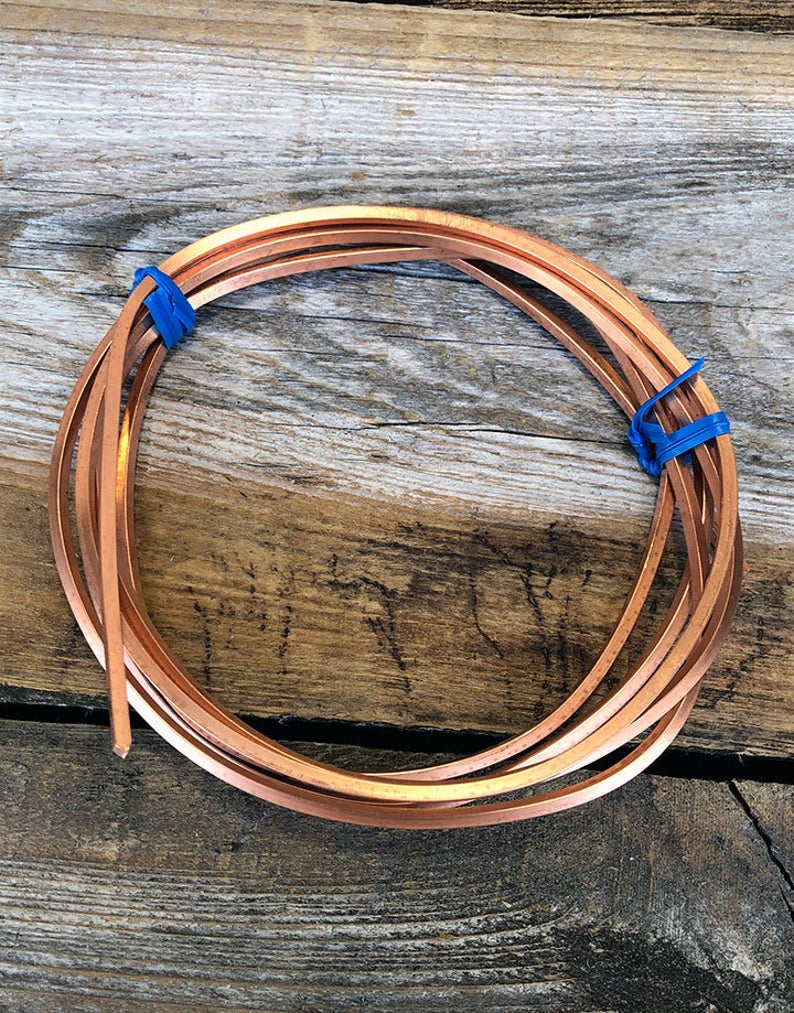
Dead Soft vs. Half-Hard and Full-Hard Copper
Here’s the video I find useful to explain the differences between these 3 types of wire.
Dead soft copper wire isn’t the only wire on my workbench. Below I’ll list its other harder sister wires:
- Half-Hard Copper
The middle child of the three types of copper wire requires slightly more effort to bend but also holds its shape better after I’ve formed my design. I use this wire when I work on structural elements that need some rigidity to ensure it holds its shape.
- Full-Hard Copper
The hardest sibling of the three. When I work with full-hard copper wire, I need to put some muscle in to bend and manipulate it. Despite the effort it requires, it holds its shape the best, but I don’t use it for intricate wrapping. Mostly I’ll use this wire to create bails or frames because they’ll need to hold their shape once finished.
Why Do I Use Dead Soft Copper Wire?
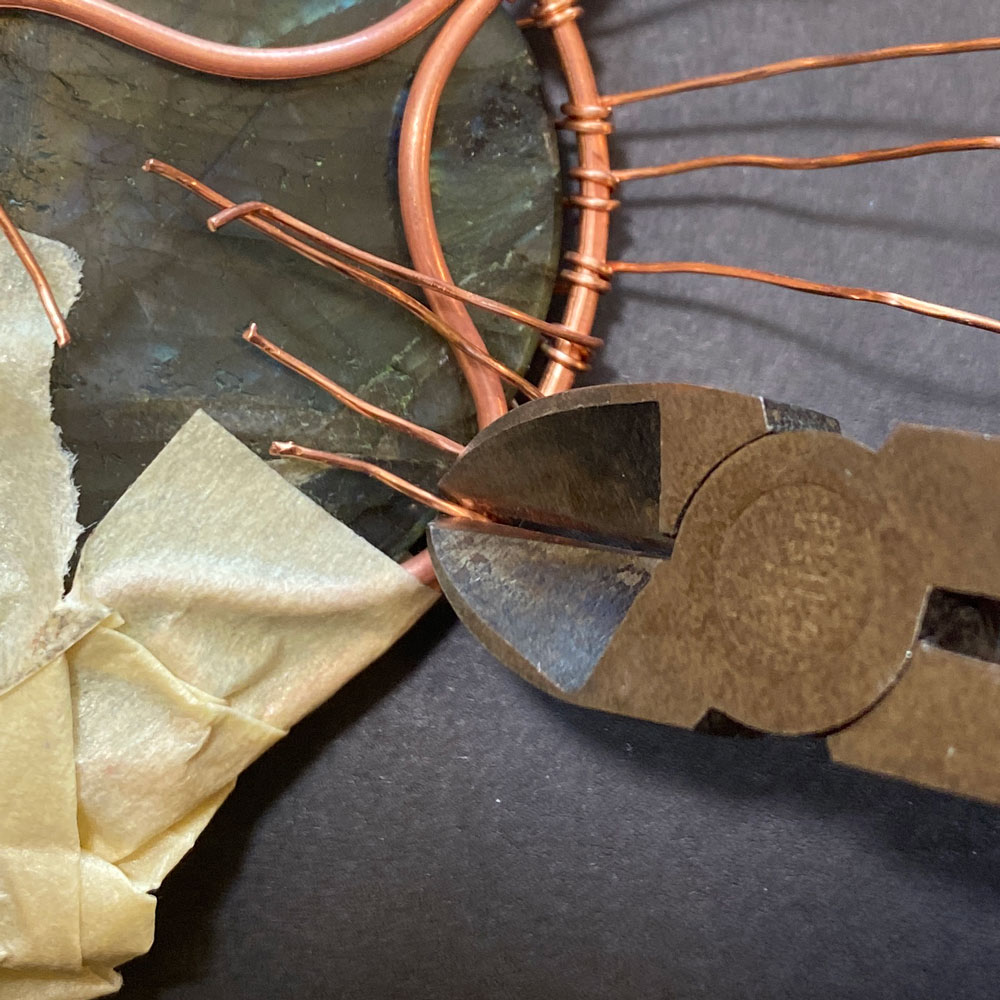
As I explained above, dead soft copper is super easy to manipulate into intricate twists and turns, and this property allows me to create stunning pieces. Below are some reasons I love this wire so much:
- Effortless Bending
It is so easy to work with! I love making loops, coils, or spirals, and a hard wire might do the same, but not as easy as dead soft copper wire. I used this wire when I learned how to manipulate the wire.
- Enhanced Control
I can control the wire and get the exact result I want. I adore clean and uniform designs and sometimes I wrap tight loops and spirals to hold my stones in place.
- Reduced Risk of Breakage
I cannot give this wire enough praise—it doesn’t snap quickly when I bend it. I tend to get frustrated easily and when a wire snaps, I feel like a failure. In my complex designs, I cannot afford to waste wire, and this is my savior wire.

- Conforms to Uneven Surfaces
Because it is so pliable I can ensure that the wire conforms to the stone’s natural angles. It gives my work a professional-looking finish without gaps or awkward angles sticking out.
- Detailed Textures
Because the wire is so soft I can add extra design elements to my pieces like hammering or textures with minimal effort. Techniques like hammering or texturing tools can be used to add unique design elements.
When and Where I Use Dead Soft Copper Wire
Given that it is so easy to work with and manipulate into different shapes and angles, I use it in a variety of ways:
- Creating Loops and Coils
We all know that loops and coils are fundamental elements of wire-wrapping jewelry. This is my go-to wire for these applications.

- Wrapping Around Findings
I find this wire conforms perfectly to the curves of findings like claps, headpins, and rings to name a few. It ensures a secure connection that also looks professionally finished.
- Detailed Wirework
The first time I tried to make filigree I used full-hard copper wire… not the best choice! My local jeweler advised me to use dead soft copper wire and the result was perfect. Textured elements and spirals are also a breeze when I use this soft wire.
- Beginners’ Choice
As I mentioned earlier, this is the perfect choice for beginners. We all need to start somewhere, and this is my best recommendation to practice your skills and experiment with different techniques.

Advantages and Drawbacks of Dead Soft Copper
As with all good things in life, I have found, there are advantages and drawbacks. Let’s consider dead soft copper wire as part of our toolkit.
Benefits:
- Highly malleable—super easy to shape and manipulate.
- Conforms easily—a great choice to wrap around uneven surfaces.
- Reduced risk of breakage—it doesn’t break easily when you manipulate it into intricate designs. I have found it is also a wonderful choice for detailed textures and wirework.
- Beginner-friendly—certainly the best choice for a beginner because it is so easy to work with.
Drawbacks:
- Lacks rigidity—it is not the best choice for structural components, and it can wear out over time.
- Can lose shape over time—sometimes I must reshape my designs because the wire wears out or loses its shape.
- Requires more support in some applications—sometimes I need added techniques to increase stability and ensure the pieces don’t unravel or fall apart.

The Final Wrap
Dead soft copper wire is one of the must-have items in my toolkit. It is easy to work with, offers me total control with minimal effort, and is perfect for when I need to do detailed work.
I must admit, it isn’t perfect for every project, and I sometimes use it in combination with the harder copper wires to ensure everything stays in place.
Oxidizing a piece after working ensures everything looks uniform afterward. If you’re seeking creative freedom in your work, this is one wire I can recommend without a shadow of a doubt.
Happy wrapping until next time!
